
The Ripple Effect
How we can positively affect others in ways we may never know

It’s been just over a year since I started writing a monthly piece here, on ‘Through Seasons.’ Thank you for spending some of your time here, for considering the thoughts and stories that I manage to get out of my head and onto a page. Some of you have not only spent your time with me, but your dollars too, and it is far from lost on me that you have decided to share your resources in trade for my creations. Truly, thank you. I’ve been asking myself to examine what it is I can provide for you.
What I aim to share with you is this: a feeling of connection - to other humans, to the earth, or both - and for the read to be insightful as well as relatable. I want your time spent with me to be thought provoking and also, maybe most importantly these days, enjoyable.
I didn’t go to school for writing, or anything very creative, although I loved both writing and art. I went to school for nursing, which is heavily science based, even though this was, for me, a less favorable subject. I followed this path much because of a single woman whose last name I do not even know. She was an elderly woman with the first name of Virginia, whom I met when I was 16-years-old.
It was my senior year of high school and my job, on Sundays, was to organize activities for those in a memory loss unit at our local senior living home, or as my classmates and I called it, “the old folks’ home.” My shift was from 1-7pm, perfect for a teenager who liked to sleep in after a full week of school and sports.
When I arrived in the early afternoon I’d organize a group activity such as bingo, or a large wall-sized crossword puzzle that everyone could help fill in. This would be followed by something “active” such as a seated balloon toss. Eventually some people would want to rest, and so I’d engage in smaller group activities, such as card games like rummy, or spend some time one-on-one with anyone interested.
The unit was locked, to prevent the residents, with their memory loss, from wandering off. Beyond the locked doors lay the other half of the facility, for people with minds who had not yet begun to fail them too much. In the common area on this side was a grand piano.
Sometime over the course of that year I was told about Virginia, a woman on the locked side whose memory loss had stolen her speech. Virginia was mute, bent over with a hump on her back that I would later learn in nursing school is called “kyphosis.” While Virgina couldn’t talk, she could still produce the most beautiful sounds, by playing the piano.
I started bringing Virginia out of the locked unit to the piano regularly on late Sunday afternoons. I’d sit next to Virginia on the piano bench, where she sat hunched over, as if her body had permanently contorted itself for just this activity, her head bowed to watch her hands move up and down the ebony and ivory colored keys. Virginia played masterpieces, not from sheet music, but solely from deep memory. It wasn’t one song, or two, it was a compilation of songs that was performance worthy, every time. This is one of the curious experiences of memory loss. One may not remember what they had for lunch, but longterm memory can stick around with incredible recall.
On one particular afternoon my shift wrapped up as it always did, and I made my way down a long hallway towards the locked exit by passing some of the residents in rocking chairs. There sat Virgina, rocking quietly, hunched over, face tilted towards the floor with a head of short grey tight curls. As I said my goodbyes Virginia started weeping. I knelt down next to her. She couldn’t speak, and thus couldn’t express to me the reason for her tears, but in my heart I knew. I was the one who released her through the locked doors, who led her to her beloved piano, where she could express herself once again through sound. I was her connection to escaping the locked confines of both this space and her silence, and I was leaving. I don’t think she understood I’d be returning. I didn’t need speech to understand this.
My two best friends in high school were sure they wanted to be nurses back when we were freshman. I, as a senior, had never given it a thought. My interests were all over the place, and I wanted to travel all over the place, and so I was looking into how to become a pilot. But Virginia, at 80 something years old, didn’t have to talk or even have an intact memory to alter my life course. We connected as humans, I looked into nursing, and I found out I could travel with this career path too. I was an RN four years later.
My partner and I went skiing at Mad River Glen last week on January 20th, as we always do, to honor the life of his best friend, Tyler Stetson, who passed away in an avalanche on that date 18 years ago. We skied and ate lunch with Tyler’s parents and some of Tyler’s good friends. The comment I consistently hear on this day, year after year, is how Tyler is still bringing people together. Last week we welcomed a new member to this special ski gathering, as a friend’s 9-year-old had the day off from school. As Tyler’s friends led her around his old stomping grounds she navigated bumps, chutes, and trees, eventually choosing the trails and leading the way. As she faced her fears and skied bigger lines than she ever had before, her smile grew bigger and bigger. Her excitement and enthusiasm was contagious, bringing a heart-warming feeling to all of us.

I share this because I’ve been struck by the underlying current in these stories - that someone can have a profound effect on the lives of others… even as their mind is quitting on them or if they’ve passed on.
Virginia may never have spoken to me, but her time with me was the catalyst for obtaining an RN after my name.
I didn’t know Tyler. But his love for skiing, and the love he shared with those around him, brings me and others to a certain ski slope every January, where we connect deeply with each other, with the mountain, and with the joy Tyler found in the mountains with the people he loved.
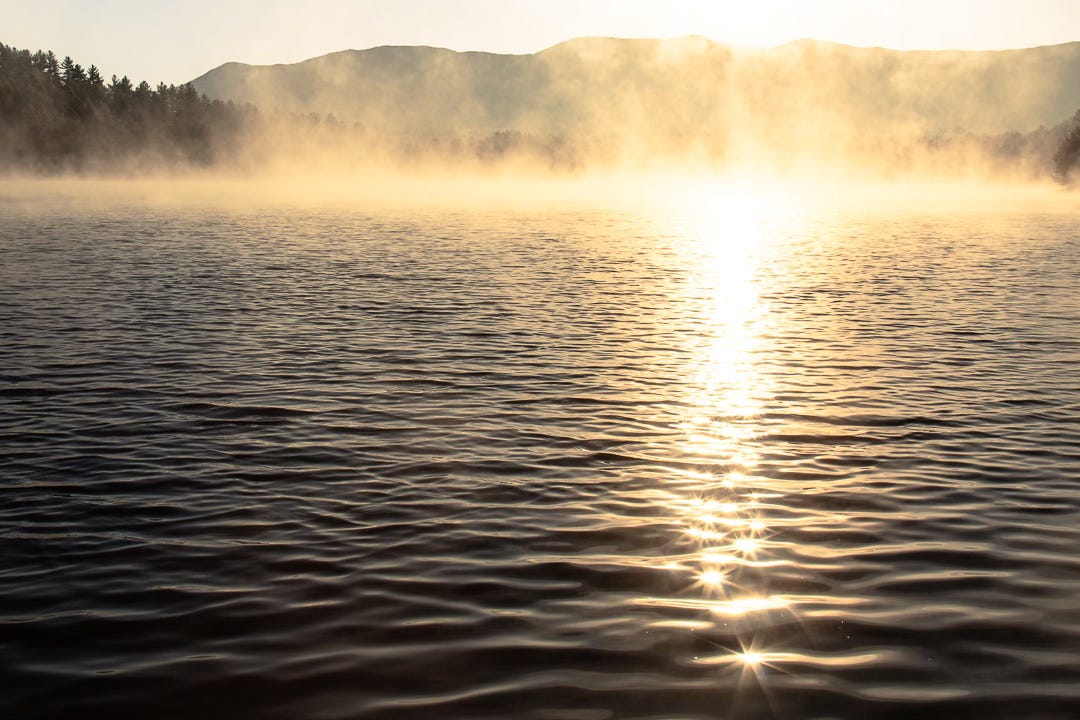
In a world that is often full of overwhelming news, there are also quieter, but no less profound, storylines of good that we are creating all around and amongst us. Don’t underestimate the power of your life. Your ripples spread vastly. We each may be but a drop of water in an ocean, but the ocean is made up of these drops, nonetheless.
Lovely story, Jenny. Whatever Virginia’s tears were about, you recognized the important connection you had established with her, and this propelled you on into your healing career. Ripples indeed!